Trending

You can choose the right resort, catch a good week of snow, and still spend the afternoon miserable: shivering in the lift queue, stopping every run to pull up a sock, or skiing the last two hours with frozen fingers and a lens you can't see through. Most winter misery isn't the weather. It's gear, worn slightly wrong.
The good news is that nearly every one of these problems has a cheap, practical fix, and most of them can be sorted before you leave the hotel in the morning. Here are the ten mistakes we see most often on the mountain, in roughly the order they tend to ruin a day.
Mistake 1: Overdressing. It's the classic first-morning error. It's minus eight at the base station, the wind is up, and you put on everything you own. Twenty minutes later you're on a chairlift, sweating under a puffy jacket, and by the time you reach the top the sweat has cooled against your skin. Skiing is hard work; you generate a surprising amount of heat. Dress for the temperature plus the effort, not for the moment you're standing still.
The fix is to start slightly cold on the first lift. You should feel a little brisk walking to the gondola. Within ten minutes of skiing you'll be comfortable, and you won't spend the day in a damp cycle of stripping layers and putting them back on.
Mistake 2: A cotton base layer. Cotton soaks up sweat and holds it against your skin, which is exactly what you don't want on a cold mountain. If you take one spare piece of clothing on a ski trip, make it a second base layer. Two merino tops for a week is plenty, and one dry change at lunch can rescue a whole afternoon.
Mistake 3: One pair of gloves for everything. People buy a single pair and expect it to handle the lift, the run, the lunch stop and the walk back. It won't. Gloves get wet from snow, sweat and the rope tow, and a wet glove is a cold glove. Thick mittens are warmer than gloves because your fingers share heat, but you lose the ability to do up a buckle. The practical answer is a system, not a single purchase: a thin liner glove, a warm outer mitt or glove, and a second dry pair in your pack for the afternoon.
Don't dry leather gloves on a radiator or a hairdryer. Stuff them with newspaper or use a proper drying rack at room temperature, and they'll last for years instead of one season.
Mistake 4: The wrong socks, or too many of them. Thick socks and two pairs at once are a common instinct, and both usually backfire. Extra fabric takes up space inside a boot that's already snug, which restricts circulation, and poor circulation means cold feet no matter how much wool you've wrapped around them. Wear one thin or medium merino sock, pulled up properly so there are no folds, and change it at lunch if your feet run hot. Take a spare pair for every two days.
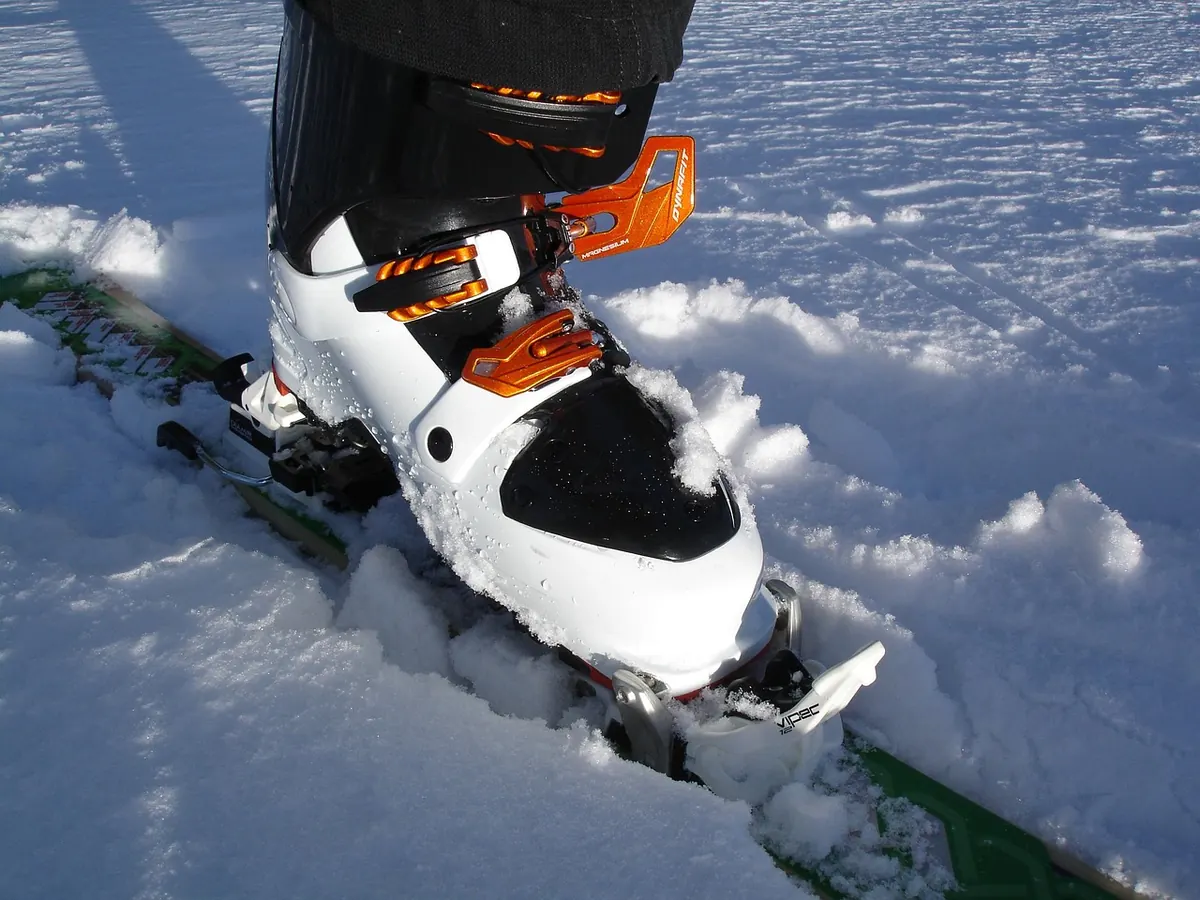
Mistake 5: Unbroken-in boots. Buying ski boots the week before a trip is one of the most expensive ways to have a bad holiday. Ski boots need time. Wear new boots around the house for a few evenings, buckle them while you watch television, and let the liner start to mould to your foot. If you're renting, take the time to try two or three pairs at the shop rather than accepting the first size handed to you, and check that the buckles work and the liner isn't packed out.
Mistake 6: Cranking every buckle as tight as it goes. A boot that's clamped shut is not a boot you can ski. Drive your heel into the back of the boot with your knee bent, close the lower buckles snugly, set the cuff, then ski one run before adjusting anything. You want your heel held down and your foot supported, not your circulation cut off. If your toes go numb within twenty minutes, that's a fit problem, not a cold-weather problem. A bootfitter can usually sort it in an afternoon.
If your feet regularly go white, numb or painful in the cold, it's worth mentioning to a doctor rather than simply buying thicker socks.
Mistake 7: Fogged goggles and the wrong lens. Goggles fog because moisture gets trapped and there's nowhere for it to go. Pulling them up onto your helmet between runs traps warm, damp air, and stuffing them back on pushes it into the foam. Keep them on your face, shake the snow off, and let them air-dry overnight away from heat. A spare lens for flat light or bright sun is one of the best small purchases in skiing, and it takes two minutes to swap.
Mistake 8: No sun protection. Snow bounces a lot of light back at you, and at altitude the sun is stronger than it feels on a cold day. Sunburn on the face and wind-burned lips can end a trip faster than a sore knee. A small tube of high-factor sunscreen and a lip balm with sun protection in a chest pocket costs almost nothing and takes no space.
Mistake 9: No plan for drying gear. Gloves, boot liners, helmets and base layers all collect moisture, and gear that goes on wet in the morning never really recovers. Pull the liners out of your boots overnight, hang gloves and jackets where air can move around them, and keep wet kit away from dry kit in your bag. If your accommodation has a drying room, use it properly: spread things out rather than piling them in a heap.
Mistake 10: Packing the daypack wrong. Two habits ruin afternoons. The first is carrying nothing at all, so a change in weather or a lost glove has no answer. The second is carrying everything, which makes you hot and tired. A sensible small pack holds a spare base layer or mid layer, dry gloves, a neck warmer, sunscreen, a snack and water. That's it. Leave the rest in the room.
Five quiet minutes the evening before saves a lot of faff in the morning. Run through this while your gear is drying:
None of these fixes are expensive, and none of them require new gear. They're small habits: starting the day a little cool, carrying one dry spare, taking ten minutes over boot fit, and drying everything properly at night. Get those right and the mountain gets to be the hard part, which is exactly how it should be.
Photo: Simon / Pixabay