Trending

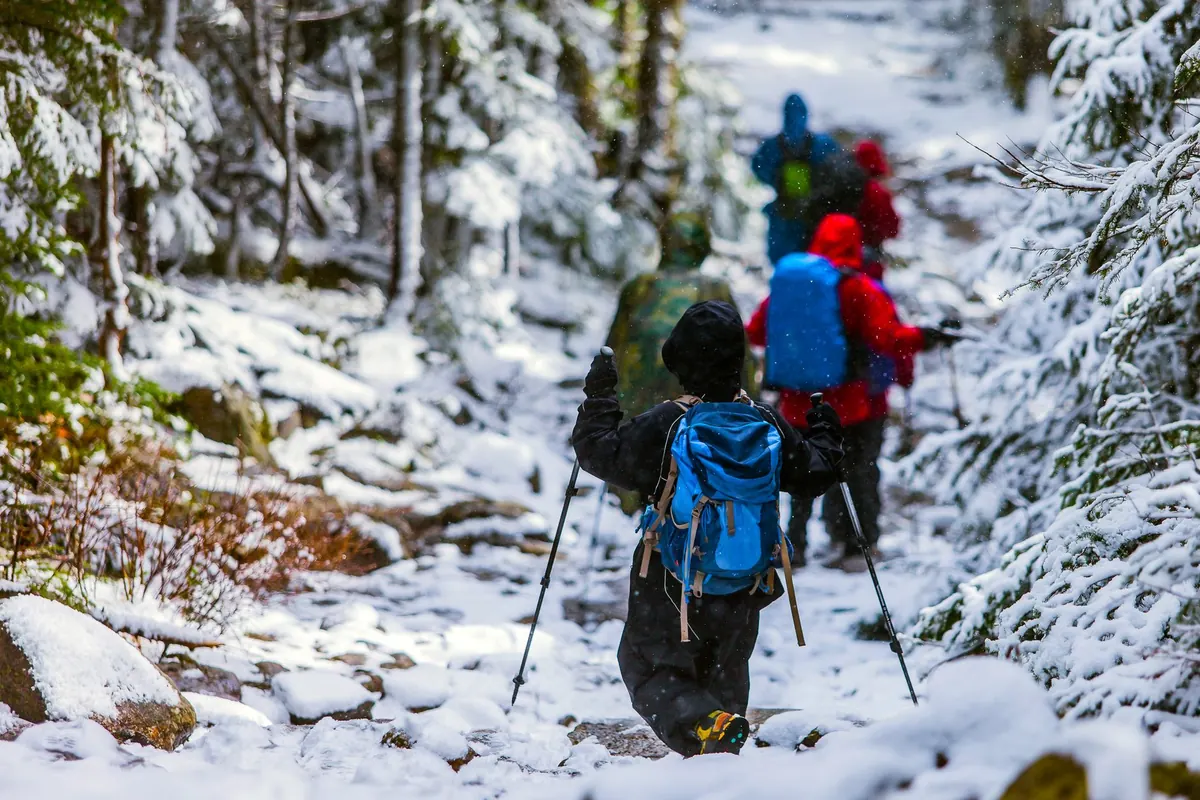
A day in the snow is a small expedition, even when it starts in a car park twenty minutes from home. Whether you are snowshoeing to a ridge, pulling a sled up the hill behind the village, or following a groomed track to a mountain hut, the difference between a day you talk about for years and one you cut short is mostly decided before you set off. What follows is a checklist made for printing: clothing, safety items, food, and the backups that save a trip when the weather turns or a boot fills with slush.
Three layers, one rule: change before you sweat. The base layer moves moisture off your skin, so choose merino wool or a synthetic fabric and leave cotton at home. Cotton soaks, holds the water against you and turns cold the moment you stop moving. The middle layer, a fleece or a light synthetic jacket, traps warmth. The outer shell blocks wind and wet snow. Together they let you fine-tune your temperature through the day instead of choosing between sweating on the climb and shivering at the viewpoint.
Adjust early, not late. The moment you feel damp under the pack straps, open the pit zips, push up your sleeves, take off your hat. And if you are not slightly cool when you leave the trailhead, you are wearing too much. You will warm up within ten minutes of walking.
These are where cold is felt first and where it ruins a day fastest. A hat that covers the ears and a thin neck buff cost almost nothing in weight and make a real difference in wind. Bring a pair of thin liner gloves for fiddly tasks and a pair of insulated mittens for warmth; fingers share heat better in mittens than in gloves, and you can slip a liner glove on for a photo without exposing bare skin. Feet need room. A boot that presses on your toes cuts circulation and your toes will be cold no matter how thick the sock. One pair of wool socks is enough; carry a spare.
This is the part of the pack you carry all season and never open. That is exactly the point. It weighs very little and it means a wrong turn, a twisted ankle or an earlier-than-expected dusk stays an inconvenience rather than an emergency.
Before you leave, tell someone your route, your expected return time and where the car is parked. Read the mountain weather forecast and the road conditions, and check the avalanche bulletin if you plan to leave marked trails. Transceiver, probe and shovel are only useful to people who have learned to use them properly; if you are heading onto steep open slopes, take a course first.
Keep an eye on each other, too. Numb, white, waxy skin is a warning sign, as are uncontrolled shivering, clumsiness and muddled speech. Get the person out of the wind, into dry layers and warm, and seek help. If you have a heart condition, asthma or another health concern, or you are launching into hard exercise in the cold for the first time, it is worth speaking to a doctor before you go.
Cold air, effort and a heavy pack all raise what you burn, and appetite is often the last thing to arrive. Eat before you feel hungry and drink before you feel thirsty.
A sandwich pulled from the top of the pack at noon can be a brick. If you want one, wrap it well and stow it against your back. Otherwise, graze: a handful every hour keeps you warmer and happier than one long sit-down meal.
A single wet sock can end a day; a single dry pair rescues it. Pack a dry bag containing a full spare base layer, a spare hat, spare gloves and dry socks. Add a small towel, a couple of plastic bags for wet gear and rubbish, and a foam sit pad — standing on something dry while you change boots is a small luxury in a cold car park.
For families, the spare set is not optional. Children find every drift, and a full change of clothes in the boot turns a tearful finish into a nap on the way home. Keep a basic car kit through the winter as well: blanket, shovel, scraper, a bag of grit, jump leads, a charging cable, a high-visibility vest and a warning triangle. Clear snow from the exhaust before you sit with the engine running, and never park where you might block a plough.
Most of the friction in a winter morning disappears if you deal with it the evening before. Lay everything out on the floor and check it against the list. Charge the phone and the headlamp, download the map. Fill the flask and portion out the snacks. Put the packed daypack by the door and the boots somewhere dry but not on direct heat, which stiffens them.
Before you walk away from the car, do four things. Look at the sky and the wind and adjust your layers so you start cool. Loosen or tighten your boots, then walk twenty steps to check them. Send someone your plan and your return time. Note the time, and decide now on the hour you will turn around, whatever the summit looks like.
The best winter days are usually the ones where nothing dramatic happens. Print the list, keep it folded in your pack, and let the snow be the only variable.
Photo: PhotoSpirit / Pexels